
Why Small Business Owners Overspend Without Realizing It
April 17th, 2026 | Small Business Resources, Tax Time
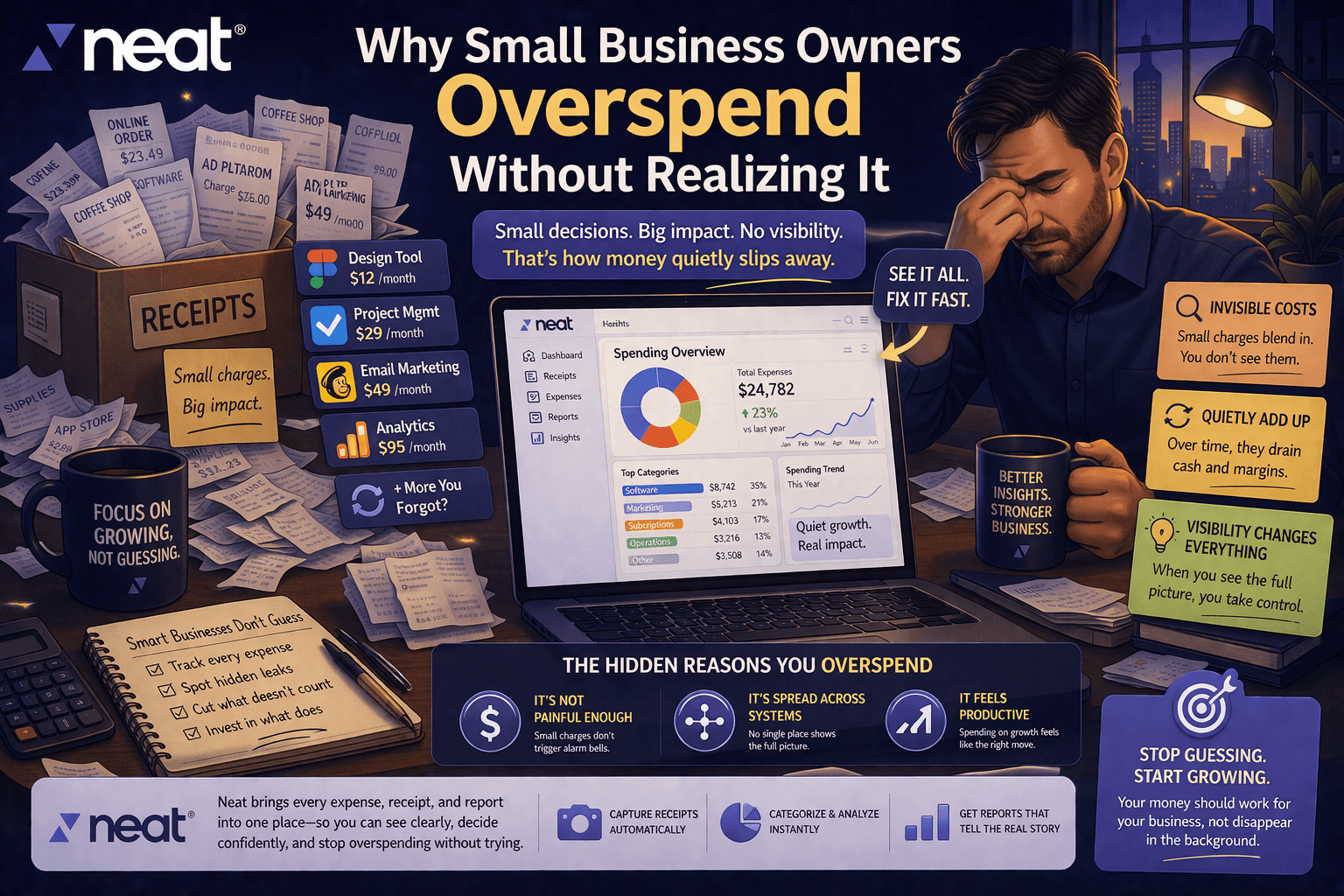
No one wakes up and decides to overspend.
There is no moment where a business owner says, “Today, I am going to waste money.”
And yet it happens all the time.
Not in big, obvious ways, but in small, quiet decisions that add up over time. That is why small business overspending is so difficult to recognize. It rarely feels like a problem while it is happening.
Overspending Does Not Feel Like Overspending
When people think about overspending, they picture major mistakes. Large purchases, reckless decisions, or completely out-of-control budgets.
That is not how it shows up in real businesses.
Instead, it looks like everyday decisions that seem reasonable in the moment. A new tool that might improve efficiency. A slightly more expensive option that saves time. A subscription that continues because it still feels useful enough.
Each decision makes sense on its own.
That is exactly what makes small business overspending so hard to catch. There is no single moment that feels wrong. It is the accumulation that creates the problem.
The Incremental Creep That Hurts Margins
Overspending rarely comes from one bad decision. It builds gradually.
A $19 subscription here. A $49 upgrade there. Another $99 tool added a few months later.
Individually, these costs feel small. But over time, they begin to stack.
For example, a business might start with one marketing platform and later add another for a specific feature. Then a third tool is introduced to solve a niche problem. Before long, the business is paying for multiple platforms that overlap in functionality.
Nothing feels excessive in isolation, but together they quietly increase operating costs and reduce profit margins.
This is how small business overspending takes hold without ever feeling urgent.
Why Most Business Owners Do Not Notice It
There are a few reasons this pattern goes unnoticed.
First, small charges do not feel painful. A recurring expense under $100 rarely triggers concern, especially when revenue is steady. Without that sense of urgency, there is no immediate reason to question it.
Second, expenses are often spread across multiple systems. Different credit cards, bank accounts, and software platforms make it difficult to see the full picture in one place. Without visibility, it is nearly impossible to spot patterns.
Third, most spending feels productive. Business owners invest in tools, marketing, and services to grow. That makes it easy to assume every expense is justified, even when it is no longer delivering value.
These factors combine to make small business overspending feel invisible.
The Subscription Effect
Subscriptions are one of the biggest contributors to hidden overspending.
They renew automatically, appear as small line items on statements, and rarely demand attention. Over time, they blend into the background.
A business might continue paying for tools that are no longer actively used, features that are no longer needed, or platforms that have been replaced but never canceled.
For example, a company may switch to a new expense tracking system but forget to cancel the previous one. Months later, both are still being billed.
Because each charge feels minor, it goes unquestioned.
But collectively, these subscriptions can represent a significant drain on cash flow.
When Temporary Decisions Become Permanent
Another common source of overspending comes from short-term decisions that quietly become long-term commitments.
A business owner might try a new tool or service with the intention of evaluating it for a month. At the time, it feels like a low-risk decision.
Then priorities shift. The trial period ends. The charge renews.
Without a clear process to revisit that decision, it becomes permanent.
Multiply that pattern across multiple tools and services, and small business overspending becomes embedded in the business without anyone intentionally choosing it.
The Hidden Pressure Overspending Creates
Even when overspending is not obvious, it still impacts the business.
It shows up as tighter margins, reduced cash flexibility, and hesitation when new opportunities arise.
You might find yourself asking, “Can we afford this?” even when revenue suggests you should be able to.
That uncertainty often comes from not having a clear understanding of where your money is going.
In many cases, the issue is not lack of revenue. It is unmanaged spending.
This Is Not About Cutting Everything
The goal is not to eliminate spending. It is to align spending with outcomes.
Some expenses should absolutely grow, especially those tied directly to revenue, efficiency, or time savings. High-performing marketing efforts, essential tools, and valuable services are worth the investment.
Others, however, may no longer serve a purpose.
The challenge is identifying which is which.
Without visibility, it is impossible to distinguish between strategic spending and unnecessary costs. That is why addressing small business overspending starts with clarity, not cuts.
The Visibility Shift That Changes Everything
Overspending becomes manageable the moment you can see it clearly.
When expenses are centralized, categorized, and easy to review, patterns begin to stand out.
You start to notice duplicate tools, categories where spending has increased, and costs that no longer justify themselves.
For example, reviewing a categorized expense report might reveal that software costs have steadily increased over the past six months without a corresponding increase in output or efficiency.
That kind of insight makes it easy to take action.
Making Overspending Visible with the Right System
This is where a system like Neat makes a meaningful difference.
Instead of piecing together information from multiple sources, everything is organized in one place. Expenses are categorized consistently, receipts are attached to transactions, and reports provide a clear breakdown of where money is going.
For instance, rather than scanning through bank statements trying to identify trends, you can quickly review a report that highlights spending by category and timeframe.
This level of visibility turns small business overspending from something hidden into something manageable.
The Confidence That Comes from Clarity
When you eliminate invisible overspending, the impact is immediate.
You free up cash that was being lost to unnecessary expenses. You make faster, more confident decisions because you understand your financial position. And you can invest more intentionally in areas that drive growth.
The business does not just feel more organized. It becomes more controlled.
Final Thought
Most small business owners do not overspend because they are careless.
They overspend because they cannot see the full picture.
Once you have visibility, the problem becomes much easier to solve. You can question expenses, make adjustments, and ensure every dollar is working toward your goals.
Tools like Neat exist to make that picture clear, so your business stays efficient, intentional, and in control of its spending.
Stop letting small expenses quietly chip away at your margins. Start your free trial of Neat and get a clear view of your receipts, subscriptions, and spending, so every dollar works harder for your business.
Share This Article


Popular

September 23rd, 2026

March 9th, 2022


June 26th, 2020


October 2nd, 2026