
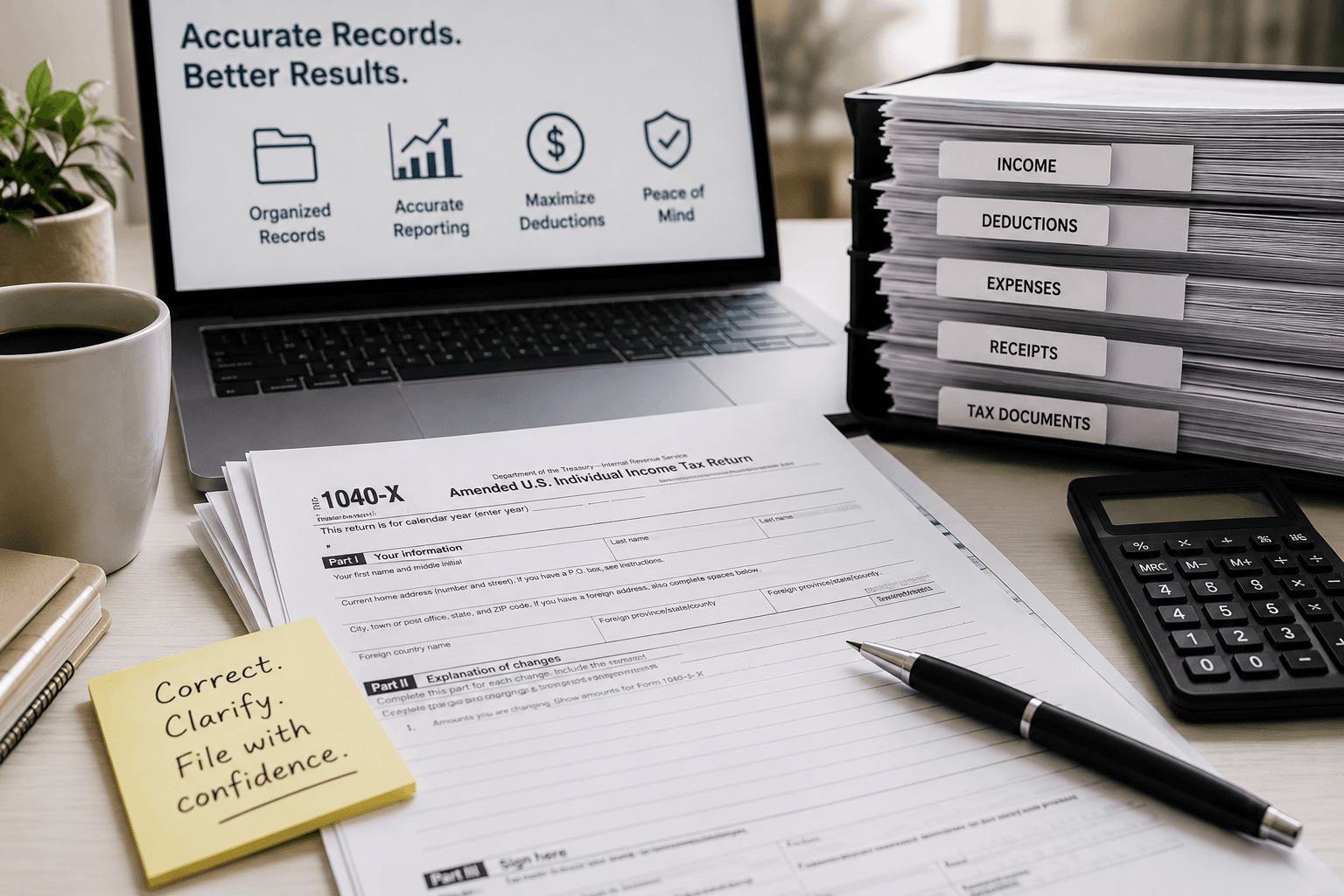
If you made a mistake on your tax return, you can fix it by filing an amended return using IRS Form 1040-X. The key is identifying what changed, correcting it accurately, and having proper documentation. Strong expense management helps prevent these issues and makes amendments faster and less stressful.
The Moment You Realize Something Is Wrong
It usually happens after you file.
You find a missing expense.
A form arrives late.
A number does not look right.
And the question hits immediately.
Do I need to fix this?
The answer is simple. If the error affects your income, deductions, credits, or filing status, you should amend your return.
The good news is that the process is straightforward.
The bad news is that without proper records, it can quickly become frustrating.
When You Actually Need to Amend Your Return
Not every mistake requires action.
If the IRS can fix it on their own, such as a basic math error, you typically do not need to file an amendment.
But there are clear situations where you do.
If you forgot to include income, missed deductions, received new tax documents, or selected the wrong filing status, you should file an amended return.
One of the most common reasons small businesses amend returns is missed or incorrect expenses.
That is where expense management becomes critical. If your expenses were not fully captured or categorized correctly, your original return may not reflect your true tax position.
What You Need Before You Start
Before filing an amendment, gather everything.
Your original tax return.
Any new or corrected documents.
Records that support the changes you are making.
This is where many people get stuck.
If your receipts are scattered across email, paper, and different systems, it becomes difficult to reconstruct what actually happened.
If you are unsure whether your documentation qualifies, this is a natural place to reference:
→ What Does the IRS Consider a Valid Receipt?
Because without proper documentation, your amendment may not hold up if reviewed.
How to Amend Your Tax Return
Amending a return is not about starting over.
It is about correcting specific parts of your original filing.
You will use Form 1040-X to show what changed. This form requires three key pieces of information. The original numbers, the corrected numbers, and a clear explanation of why the change is being made.
Most tax software now supports amendments, which simplifies the process significantly.
If you are filing by hand, take your time. Accuracy matters more than speed.
Once completed, you can typically file your amended return electronically for recent tax years or mail it to the IRS if required.
A Real-World Scenario
A small business owner filed their return and later realized they had missed several months of software and subscription expenses.
At the time, those charges were buried in a credit card statement and never properly categorized.
After organizing their transactions, they discovered they had underreported expenses by several thousand dollars.
By filing an amended return, they were able to correct the issue and reduce their tax liability.
The key difference was visibility.
Once their expense management system improved, these types of errors became far less likely.
How Long You Have to Amend
You generally have up to three years from the date you filed your original return, or two years from the date you paid the tax, whichever is later.
That may sound like plenty of time.
But the longer you wait, the harder it becomes to gather accurate information.
Details fade. Documents get lost. Context disappears.
Because delays make everything more difficult to fix later.
What Happens After You File
Once your amended return is submitted, processing can take several weeks or longer depending on volume.
You can track the status through the IRS system, but patience is required.
If your amendment results in a refund, it will be issued after processing is complete. If you owe additional tax, paying sooner helps reduce penalties and interest.
How to Avoid Amending in the Future
Most amendments are preventable.
They happen when information is missing, disorganized, or misunderstood.
Strong expense management reduces that risk significantly.
When receipts are captured in real time, transactions are categorized correctly, and reports are accurate, your tax return is built on reliable data from the start.
That means fewer surprises.
And fewer corrections later.
If your current process feels reactive, this is a good opportunity to strengthen your foundation by improving your overall financial organization.
Because the goal is not just to fix mistakes.
It is to prevent them.
The Bottom Line
Amending a tax return is not as complicated as it seems.
But it does require accurate information and clear documentation.
If your records are incomplete, the process becomes harder than it needs to be.
The more organized your expense management system is, the easier it becomes to file correctly the first time and fix things quickly if needed.
If you want to avoid the stress of missed deductions and last-minute corrections, it starts with better expense management.
Start your free trial and build a system that keeps your finances accurate from day one.
Share This Article


Popular

September 23rd, 2026

March 9th, 2022


June 26th, 2020


August 23rd, 2022