
It is one of the most common questions small business owners ask as the tax deadline approaches.
What happens if you cannot find all of your receipts?
The short answer is yes, you can still file your taxes even if some receipts are missing. But the key is being able to reasonably support the expense if the IRS ever asks for documentation.
Receipts are the best proof of a business expense, but they are not the only form of documentation that may be accepted. If you are missing receipts, there are ways to reconstruct records so your deductions remain accurate and defensible.
Here is what small business owners should know.
What the IRS Says About Missing Receipts
The IRS expects taxpayers to keep records that support the income and deductions reported on their tax returns.
According to IRS Publication 583, Starting a Business and Keeping Records, business owners should maintain records that show:
- The amount of the expense
- The date of the expense
- The place of purchase or vendor
- The business purpose
A receipt typically contains most of this information, which is why it is the preferred form of documentation.
However, if a receipt is lost, the IRS allows taxpayers to reconstruct records using other credible documentation, as long as the information is accurate and supports the expense.
Reconstruction Methods for Missing Receipts
When a receipt cannot be found, you can often rebuild the record using other documents.
Reconstruction may include:
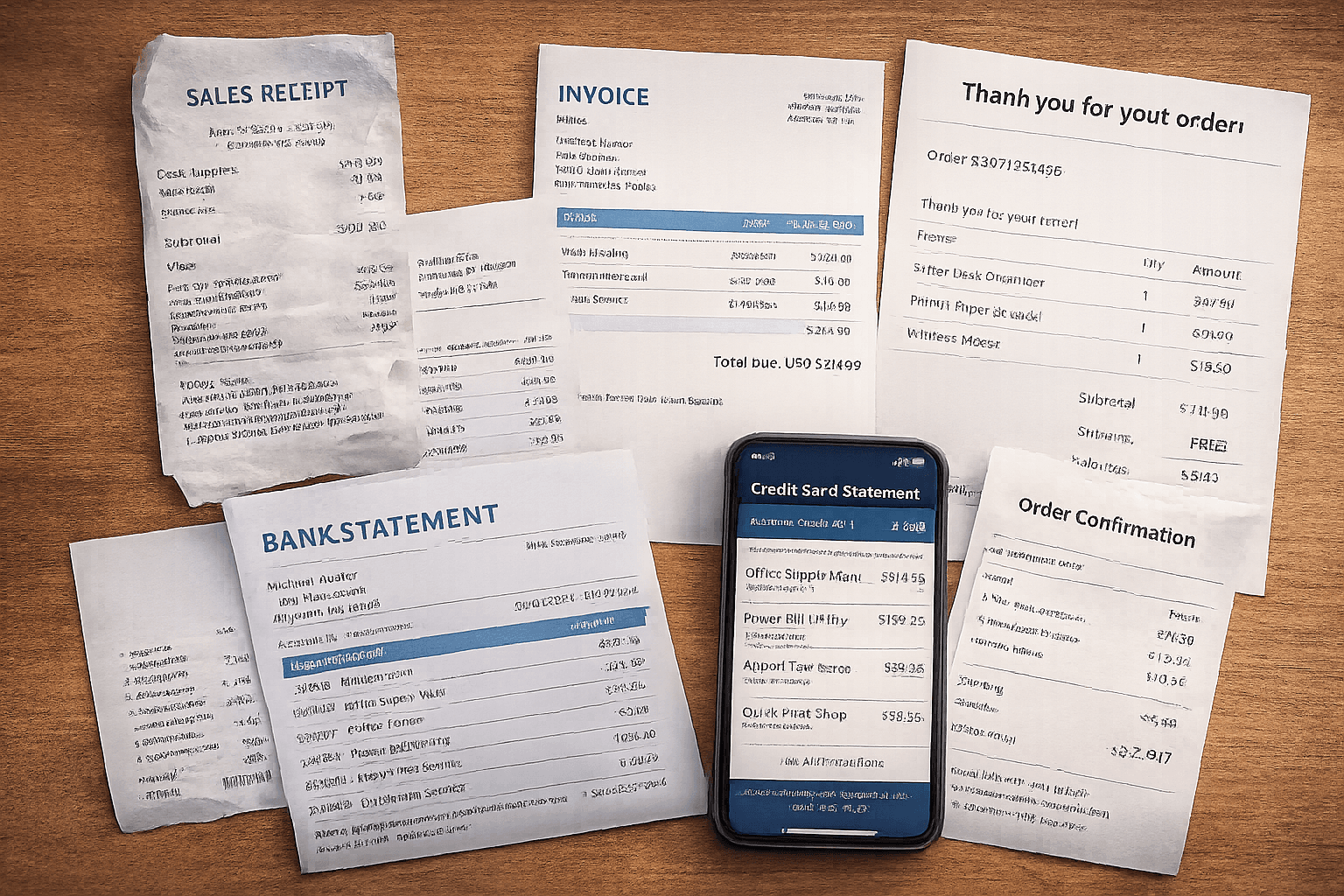
- Order confirmations from email
- Vendor invoices
- Online purchase histories
- Calendar entries related to the expense
- Notes describing the business purpose
For example, if you purchased office supplies but lost the receipt, an online order confirmation and a bank transaction may help confirm the expense.
The goal is to create a clear record that explains what the purchase was and how it relates to your business.
Using Bank Statements as Supporting Documentation
Bank statements can be helpful when reconstructing business expenses.
They typically show:
- The date of the transaction
- The name of the vendor
- The amount paid
While bank statements do not provide itemized purchase details, they can support that a transaction occurred.
If paired with other information, such as an email order confirmation or vendor invoice, bank records can help verify the legitimacy of an expense.
Reviewing your bank statements can also help identify deductions that might have been overlooked.
Using Credit Card Logs
Credit card statements are another valuable resource when receipts are missing.
These statements often provide:
- Merchant names
- Transaction dates
- Payment amounts
Some credit card providers even allow you to download detailed transaction histories that can be used to identify business purchases.
Cross-referencing these statements with email receipts or purchase histories can help rebuild missing documentation.
This process is often enough to support legitimate expenses when preparing your tax return.
Special Rule for Small Expenses
The IRS does allow an exception for certain small expenses.
According to IRS Publication 463, receipts are generally not required for expenses under $75, except for lodging. However, you still need to record the date, amount, business purpose, and other relevant details of the expense.
Even though receipts may not be required for these smaller purchases, keeping them is still considered best practice.
Why Organization Matters
Missing receipts often happen when financial records are scattered across different places. Paper receipts get lost, email confirmations get buried, and purchase histories are difficult to track down.
Capturing receipts and organizing financial records throughout the year prevents this problem.
Instead of reconstructing expenses later, everything is already documented and easy to find.
Neat helps small business owners capture receipts, store digital records, and organize expenses automatically. When tax season arrives, the documentation you need is already in place.
Share This Article


Popular

September 23rd, 2026

March 9th, 2022


June 26th, 2020


October 2nd, 2026