
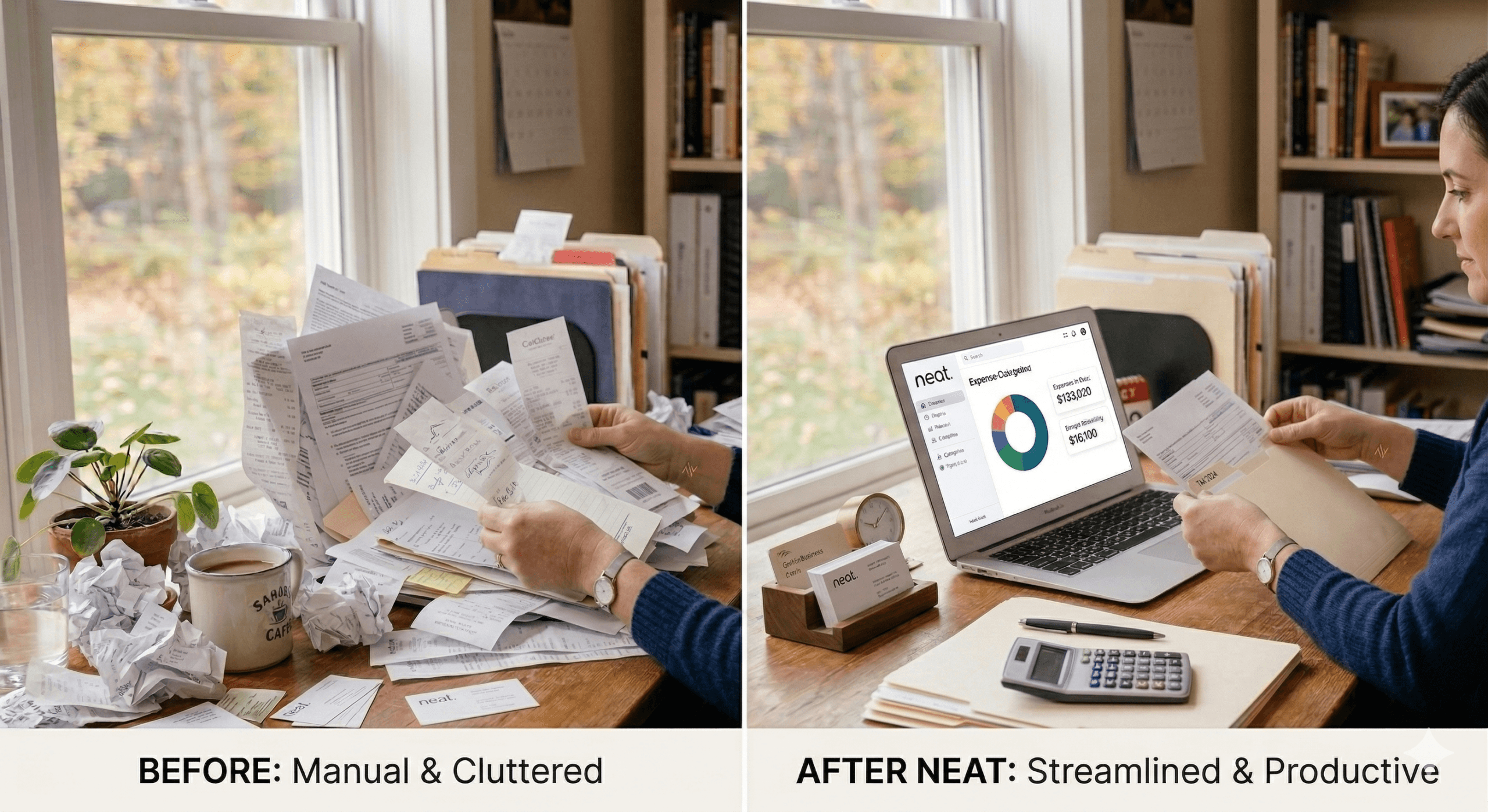
If you filed a tax extension this year, you are in good company. Every year, millions of taxpayers request additional time to file their returns, including many small business owners whose finances require more documentation and review.
Filing an extension can remove the immediate pressure of the April deadline. But the six months between April and October can pass quickly if you do not use that time intentionally.
The goal now is simple. Move from tax panic to tax preparation.
Instead of waiting until October to scramble again, use the extension period to organize your records, clean up your expenses, and create financial reports that make filing your return much easier.
Here is how small business owners can get organized before the October deadline.
Clean Up Your Receipts
For many business owners, receipts are scattered across multiple places by the time tax season arrives. Some are in wallets or desk drawers. Others are buried in email confirmations or saved as screenshots on a phone.
Start by gathering receipts from common locations such as:
- Email inboxes
- Paper receipts from purchases
- Online order confirmations
- Credit card statements
- Digital invoices from vendors
Once collected, digitize them so they are stored securely and easy to find.
Scanning receipts with a tool like Neat allows you to capture them quickly using your phone camera. The platform extracts important details such as the vendor, purchase date, and amount, which saves hours of manual entry.
Organizing receipts now prevents a second last-minute scramble when the October deadline approaches.
Categorize Your Expenses
After receipts are collected, the next step is categorizing expenses into tax-related categories.
Typical small business expense categories include:
- Office supplies
- Software subscriptions
- Marketing and advertising
- Travel and transportation
- Meals and client expenses
- Equipment purchases
Categorizing expenses helps determine your total deductions and gives your accountant a clearer picture of your business activity.
Manually reviewing hundreds of transactions can take significant time. Many expense management platforms, including Neat, automatically categorize transactions using receipt data, which speeds up the process and reduces errors.
Track Your Business Mileage
Mileage is one of the most overlooked deductions for small business owners.
If you use your vehicle for business purposes, the IRS requires documentation that includes:
- Date of travel
- Business purpose of the trip
- Starting and ending locations
- Miles driven
These trips can include client meetings, site visits, supply runs, or travel between job locations.
If mileage tracking was inconsistent earlier in the year, the extension period is a good time to reconstruct records using calendars, client appointments, and job schedules.
Keeping mileage logs alongside receipts and expenses ensures that this deduction is properly supported.
Prepare Profit and Loss Reports
Once your receipts and expenses are organized, it becomes much easier to generate financial reports that your accountant can use.
One of the most important reports is a profit and loss statement, which summarizes:
- Total income
- Total business expenses
- Net profit or loss for the year
A clean profit and loss report helps your accountant verify deductions, identify potential tax savings, and prepare your tax return efficiently.
Generating this report early also gives you insight into how your business actually performed during the year.
With Neat, expenses and receipts can be organized automatically and exported into reports that accountants can use immediately.
Turn Your Extension Into an Advantage
A tax extension should not be viewed as a delay. Instead, it can be an opportunity to finally organize your financial records and create better systems for the future.
By taking time now to:
- Collect and digitize receipts
- Categorize expenses
- Track mileage
- Prepare financial reports
you make the October filing process far smoother and reduce stress for both you and your accountant.
Share This Article


Popular

September 23rd, 2026

March 9th, 2022


June 26th, 2020


October 2nd, 2026