
The Biggest Tax Prep Mistake Small Businesses Make Starts in January, Not April
March 23rd, 2026 | Small Business Resources, Tax Time
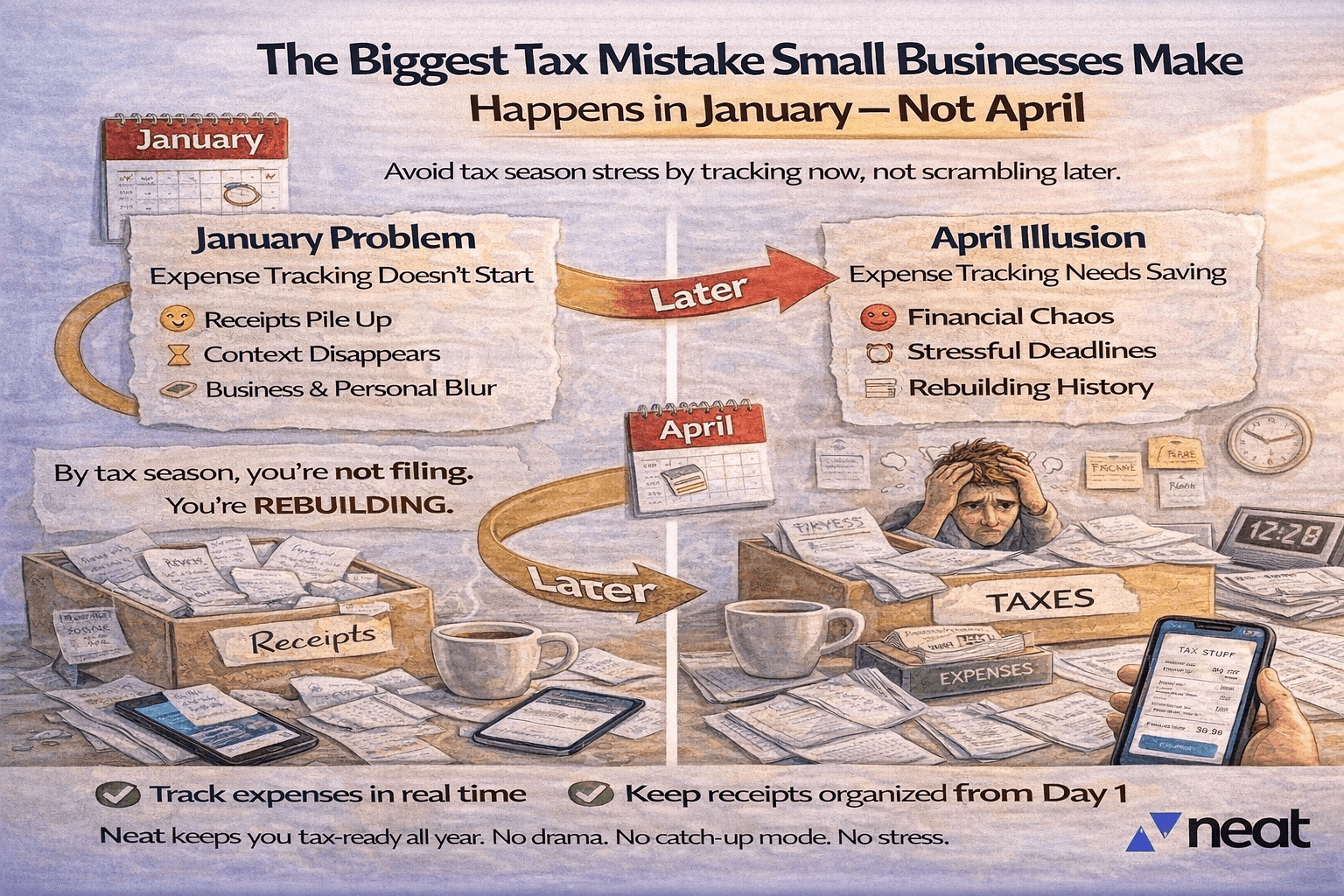
Most small business owners think tax mistakes happen in April.
They don’t.
April is just when the consequences show up.
The real tax preparation mistakes are made quietly, months earlier, in January, February, and during every busy stretch when small business bookkeeping and expense tracking get pushed to “later.”
By the time tax season arrives, your financial records are either organized… or chaotic.
The April Illusion: Why Tax Season Feels So Stressful
April feels overwhelming because it’s loud.
Deadlines.
Emails from accountants.
Tax forms you haven’t reviewed in months.
But tax season does not create bookkeeping problems.
It reveals them.
If your receipts, expenses, and financial documents haven’t been consistently tracked, tax preparation for your small business becomes a reconstruction project instead of a routine filing process.
The January Problem: Where Bookkeeping Gaps Actually Begin
January is when businesses reset.
New goals.
New clients.
New revenue momentum.
And that’s exactly why it’s risky for bookkeeping consistency.
This is when many founders decide:
“I’ll get organized once things slow down.”
“I’ll catch up on receipt tracking later.”
“I’ll handle bookkeeping before tax season.”
Things rarely slow down.
And every untracked expense after January compounds the bookkeeping backlog.
Why This Small Business Bookkeeping Mistake Is So Common
This isn’t laziness.
It’s optimism.
Small business owners and freelancers are focused on growth, client work, and operations, not daily expense tracking or receipt management.
They assume:
- They’ll remember expenses
- They’ll organize financial records later
- Future time will be less busy
But delayed bookkeeping leads to incomplete financial records and more complex tax preparation.
Future-you is always busier than present-you.
What Actually Goes Wrong When Expense Tracking Slips Early
When expense tracking and receipt capture fall behind at the start of the year:
- Receipts get lost
- Transaction details lose context
- Personal and business expenses blur
- Estimates replace accurate financial data
- Organized financial records disappear
By April, you’re not just preparing taxes.
You’re rebuilding your books.
That reconstruction is what creates tax season stress for small businesses.
Why Year-Round Bookkeeping Makes Tax Preparation Easier
Effective tax preparation for small businesses is not about working harder in April.
It’s about maintaining organized financial records all year.
When bookkeeping systems are consistent:
- Expenses are already categorized
- Receipts are searchable
- Reports are accountant-ready
- Tax documents are easy to generate
Instead of scrambling for information, you simply review and file.
The Fix Is Simple (and Intentionally Boring)
Good bookkeeping is not dramatic.
It is routine.
Systematic.
Predictable.
The solution is not last-minute tax organization.
It is ongoing expense tracking and receipt management from January onward.
If expenses are captured as they happen, there is nothing to “prep” during tax season.
How Neat Keeps Small Businesses Tax-Ready by Default
Neat is designed to support small business bookkeeping and tax preparation year-round — not just during tax season.
With automated:
- Receipt tracking
- Expense organization
- Document storage
- Accountant-ready financial reports
Neat helps businesses maintain organized books without relying on memory or manual processes.
Instead of catching up on bookkeeping in March or April, your financial records stay tax-ready every month.
The Real Operational Advantage of Starting in January
When bookkeeping and expense tracking are handled early:
- February feels lighter
- March feels organized
- Tax preparation becomes faster
- April becomes predictable
Boring systems create calm tax seasons.
And calm tax seasons are a direct result of organized financial records.
Final Thought: Fix January, and Tax Season Fixes Itself
If tax season feels overwhelming, the root cause usually isn’t April deadlines.
It’s inconsistent bookkeeping and expense tracking earlier in the year.
Small business tax preparation becomes significantly easier when:
- Receipts are captured in real time
- Expenses are categorized consistently
- Financial records stay organized year-round
Fix the system in January, and the stress never compounds.
Neat exists to make tax preparation for small businesses predictable,not because you worked harder at the last minute, but because your bookkeeping, receipt tracking, and financial records were organized from day one.
Stay tax-ready all year with automated receipt tracking and expense organization. Start Your 14-Day Free Trial.
Share This Article


Popular


March 9th, 2022


June 26th, 2020


August 23rd, 2022